
Powering Potential: Plugging In Louisiana's Opportunity Youth

Executive Summary
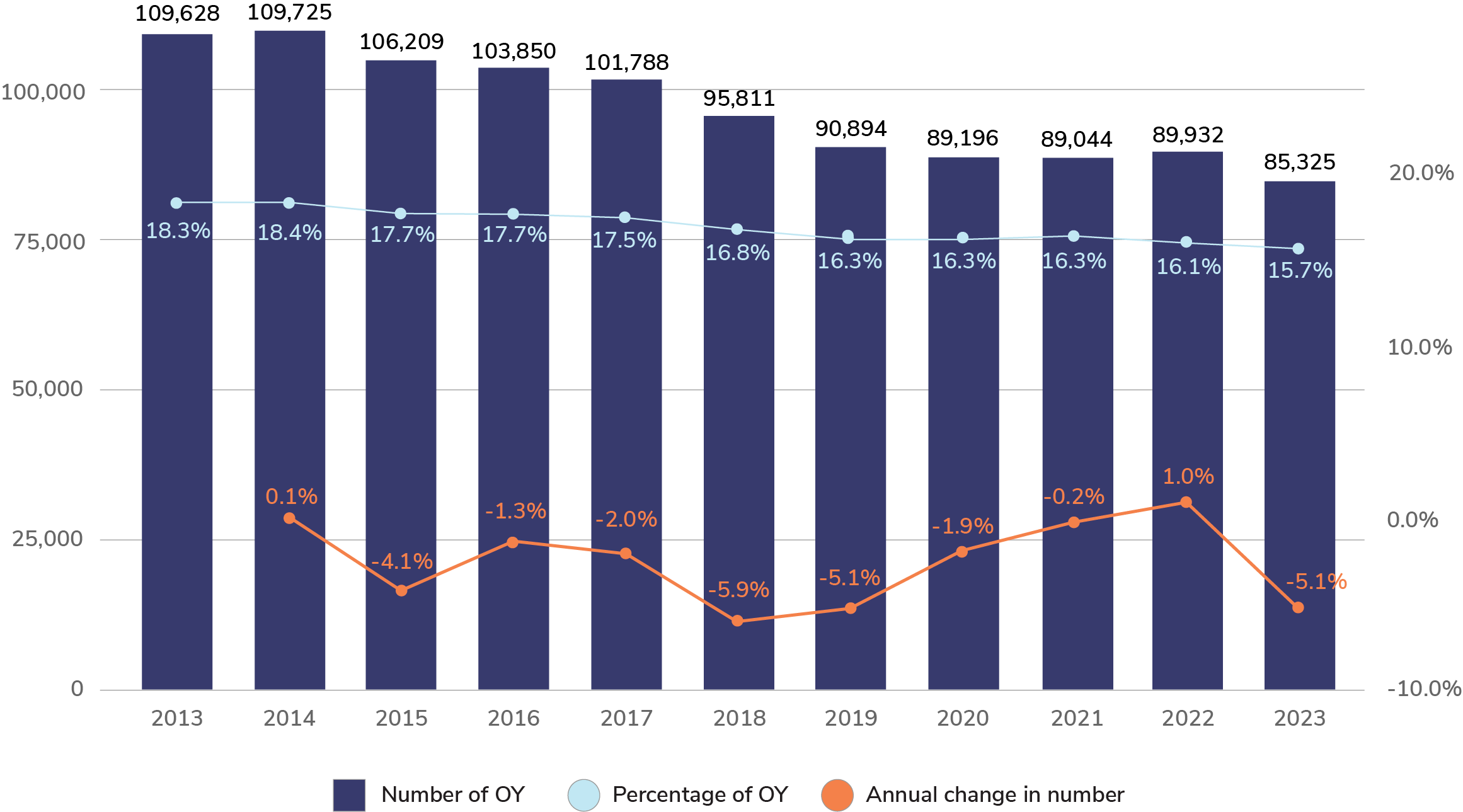
Far too many of Louisiana’s young people face an unusually steep climb on their path to adulthood. But with proper support and resources, they can reconnect and thrive. As recently as 2023 (the most recent year for which data is available), 85,325 young Louisianans aged 16-24 were disconnected from both work and school, representing 15.7% of the state's youth. These young people make up Louisiana’s Opportunity Youth. While the percentage of disconnected youth has gradually declined over the past decade, Louisiana's share of Opportunity Youth remains among the highest in the nation - significantly exceeding the national rate of 10.6%.
Opportunity Youth need our support to fully plug into the resources and relationships that power their growth and success. Like all young people, Louisiana's youth are discovering their interests, passions, and sense of purpose during the crucial transition to adulthood. They need access to supportive relationships, educational opportunities, and meaningful work to thrive during this period of exploration and growth. Our communities grow stronger when we ensure young people have the connections they need to flourish.1 This report employs narrative shift frames outlined in the following report when talking about Louisiana’s young people: FrameWorks Institute. Connections and Communities: Reframing How We Talk About Opportunity Youth. Washington, DC: FrameWorks Institute, March 2024.
This report examines the U.S. Census Bureau’s American Community Survey microdata to understand how we can better equip Louisiana's Opportunity Youth with the tools they need, and identifies critical transition points where young people may need additional support to find their footing. Advocates, policymakers, community leaders, educators, employers, and youth can use this data to cultivate environments where strong relationships can take root and create programs that equip young people with the resources they need for their journey. When we support Opportunity Youth in building these crucial connections, we strengthen the future of our entire state.
Key Report Findings

Critical Transition
Points
Youth disconnection spikes dramatically at key transition points, with Louisiana’s older youth experiencing higher disconnection rates than their teen peers.
- From age 17 to 18, disconnection rates almost triple from 4.2% to 11.5%.
- From age 18 to 19, disconnection again increases sharply to 18.9%.
- 21-24-year-olds in Louisiana consistently experience disconnection rates of over 20%.

Steep Climb into
Adulthood
Opportunity Youth face a particularly steep climb on the path to adulthood in Louisiana due to compounding barriers and circumstances.
- Nearly one-third of Opportunity Youth don’t own a computer, compared to 16% of their connected peers. Nearly one-fourth ( 23.6%) lack broadband access.
- Opportunity Youth are almost three times as likely to be a parent as their connected peers.
- Louisiana Opportunity Youth are more than twice as likely as connected youth to have a disability.
- 17% of Opportunity Youth lack health insurance as compared to 9% of their connected peers.

Racial & Economic Disparities
Historic and systemic barriers have led to large variations in disconnection rates based on race and sex.
- 20.5% of Black youth are disconnected compared to 12.6% of white youth.
- Young Black men are disproportionately likely to be disconnected, while young white men are more likely to be connected.
- 91.3% of Opportunity Youth earn less than $15,000 annually, as compared to 71.6% of their connected peers.
- More than 33% live in poverty, as compared to 19% of connected youth.

Geographic Disparities
Louisiana’s rural youth face particularly steep challenges.
- 19.3% of rural youth experienced disconnection in 2023, a higher rate than all but one metro area in the state.
- Northeastern Louisiana parishes show the highest disconnection rates, with 10 parishes in the region exceeding 30% disconnection.
- Of Louisiana’s metro areas, Baton Rouge and New Orleans have the highest number of Opportunity Youth.
- Houma-Bayou Cane-Thibodaux metropolitan area had the highest disconnection rate, with over 20% of young people disconnected in 2023.
Introduction
Louisiana's youth are discovering their interests, passions, and sense of purpose. Young people power our communities and make our state stronger and more vibrant when plugged into the resources and relationships they need to thrive. However, in 2023, 85,325 of Louisiana's 544,450 young people - or 15.7% - aged 16-24 were disconnected from work and school, making them Louisiana's Opportunity Youth. While disconnection rates in Louisiana have been gradually declining over the past decade, Louisiana still experiences much higher disconnection than the national rate of 10.6%.
Adolescence is a crucial period of social learning. Young people explore the world outside their families in new ways, testing theories about who they are and where they fit in.2 National Academies of Sciences, Engineering, and Medicine. (2019). The Promise of Adolescence: Realizing Opportunity for All Youth. Washington, DC: The National Academies Press. doi: https://doi.org/10.17226/25388.
They collect information that will shape their future paths. We can support their healthy development by ensuring they can access the tools required for their journey, including stable housing, access to technology, healthcare, educational opportunities, and meaningful work experiences.
Opportunity Youth are people between the ages of 16 and 24 who are neither working nor in school.
Every city, town, and parish in Louisiana has Opportunity Youth living in their community who hold great potential to contribute to our state when plugged into the resources, connections, and conditions that create the stability they need to thrive.
In 2023, of the over 39 million young people aged 16-24 living in the United States, approximately 4.15 million were neither working nor in school. These young people require connectivity and stability during this crucial period of emerging adulthood to explore their interests and develop their skills. When young people lack connections to jobs and education during these formative years, the effects can echo long into adulthood, making the path forward increasingly challenging to navigate.3 All of the graphs and data analysis on Louisiana’s Opportunity Youth in this report use IPUMS USA data. IPUMS USA uses source data provided by the United States Census Bureau. Steven Ruggles, Sarah Flood, Matthew Sobek, Daniel Backman, Annie Chen, Grace Cooper, Stephanie Richards, Renae Rodgers, and Megan Schouweiler. IPUMS USA: Version 16.0 [dataset]. Minneapolis, MN: IPUMS, 2024. https://doi.org/10.18128/D010.V16.0
|
| U.S. Census American Community Survey (ACS) Definitions |
|---|---|
| In School | Part-time or full-time students who have attended school or college in the past three months |
| Working | Those who had any full- or part-time work in the previous week |
| Not Working | Unemployed in previous week or not in labor force and not looking for a job |
Figure 1. Louisiana Has Higher Disconnection Rates Than The National Average
The gap between state and national rates suggests that Louisiana needs to strengthen the support and services it provides for young people.4 Jackson Voss, Reconnecting Louisiana’s Opportunity Youth (Baton Rouge: Louisiana Budget Project, March 31, 2022), 5, https://investlouisiana.org/wp-content/uploads/2024/02/Reconnecting-Louisianas-Opportunity-Youth.pdf. Opportunity Youth often lack the crucial connections to educational institutions, employment opportunities, and supportive relationships to transition smoothly into adulthood. Many have experience with the child welfare, foster care, and the criminal legal systems, making their path to adulthood particularly steep. These young people need guidance and support to help them navigate this challenging terrain and find their footing.
This report's data illuminates the challenges Louisiana's Opportunity Youth face and the critical points where additional support could help them connect to education and employment. By understanding these patterns, we can better equip our young people with the tools and relationships they need to successfully navigate their path to adulthood, strengthening our community and our state.
A trend in the right direction, but work remains
Over the last decade, we've seen gradual progress in connecting Louisiana's youth to the resources and supports that power their growth and success. The percentage of disconnected youth has decreased from 18.3% in 2013 to 15.7% in 2023. Nationally, the number of Opportunity Youth has also declined over the past decade, except for a significant spike in 2020 due to COVID-19.5 One reason there is not the same COVID-19 spike in numbers in the Louisiana data is that this report uses 5-year average ACS census data, which smooths out dramatic one-year shifts and rather shows trends over time. For more on why this report uses 5-year averages, see the methodological note. While the downward trend of disconnection rates in Louisiana is encouraging, we can and should do better for our young people.
Figure 2. Youth Disconnection in Louisiana Has Fallen Over the Last Decade
Among Louisiana's 16-24 year olds, the labor force participation rate – the percentage of young people who are either working or seeking work – was 54% (296,696 youth) in 2023. If youth in school are taken out of the total, the labor force participation rate increases to 74%. As for education, 57% (309,525) of young people aged 16-24 in the state were enrolled in school, while 43% (234,925) were not enrolled in school. Of those not enrolled in school, 25,118 were unemployed, and 60,207 were not in the labor force. Togther, these 85,325 young people comprise Louisiana’s Opportunity Youth (15.7%).
Table 1. Louisiana youth engagement in work and school
|
| In School | Not In School | Total |
|---|---|---|---|
| Employed | 109,509 | 149,600 | 259,109 |
| Unemployed | 12,469 | 25,118 | 37,587 |
| Not in Labor Force | 187,547 | 60,207 | 247,754 |
| Total | 309,525 | 234,925 | 544,450 |
A note on “unemployed” versus “not in labor force:” The difference between being unemployed and not being in the labor force lies in whether someone is actively seeking work. An unemployed person is actively looking for a job - they might be submitting applications, going to interviews, or contacting employers. In contrast, people not in the labor force are not currently working or looking for work - this includes retirees, full-time students, stay-at-home parents, institutionalized people, and those who have given up searching for work.6 For more on the distinction between unemployed and not in the labor force, see: Josh Bivens, “The Fuzzy Line between ‘Unemployed’ and ‘Not in the Labor Force’ and What It Means for Job Creation Strategies and the Federal Reserve,” Economic Policy Institute, March 28, 2018, https://www.epi.org/publication/the-fuzzy-line-between-unemployed-and-not-in-the-labor-force-and-what-it-means-for-job-creation-strategies-and-the-federal-reserve/. This distinction is crucial because only unemployed people are included when calculating the unemployment rate.
Critical Transition Points
Youth disconnection rates spike dramatically at key transition points, with Louisiana’s older youth experiencing higher disconnection rates than some of their teen peers.
Young people in Louisiana face key transition points where they are more likely to face roadblocks and disconnect from future opportunities. Data shows that disconnection rates spike dramatically as teens leave high school and again when they transition from their teens into their early 20s. This indicates where there may be gaps in services, programs, and opportunities that support youth needs. While 16 and 17-year-old Louisianans experience relatively low rates of disconnection, 3.6% and 4.2%, respectively, these rates increase rapidly for 18-year-olds (11.5%) and continue to climb for 19-year-olds (18.9%). Louisianans aged 21-24 have the highest disconnection rates, ranging from 20.5% to 22.6%. For instance, a 24-year-old in Louisiana is over 6 times more likely to be disconnected than a 16-year-old, suggesting that our young people need additional guidance and support as they navigate these challenging transitions.
Figure 3. Disconnection Rates Rise Quickly as Youth Enter Their Late Teens

Whereas a substantial majority of 16 and 17-year-olds are both outside the labor force and enrolled in school, school enrollment steadily declines as youth age, with just over 20% of 24-year-olds participating in an educational program compared to 58.2% of 19-year-olds. Youth in their 20s, however, are more likely to participate in the labor force, with employment rates steadily increasing as they age.
Figure 4. Youth engagement in school and work change over time
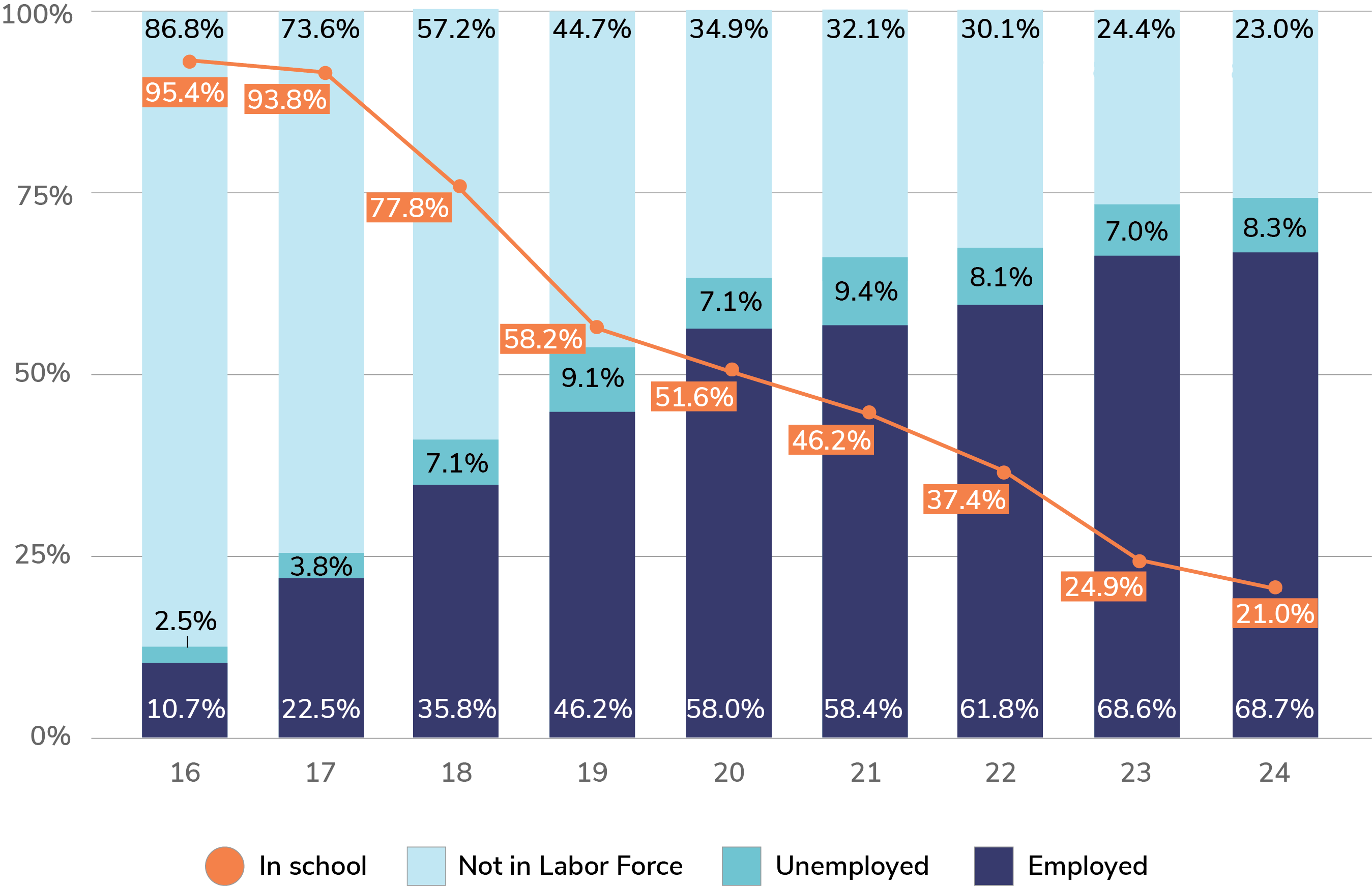
Figure 5. Highest educational attainment achieved by
Louisiana disconnected & connected youth
While most Opportunity Youth hold a high school diploma or a GED, they are much less likely to be connected to higher education than their connected peers. Additionally, this data indicates that when Opportunity Youth enroll in college, they may not complete their degrees or stay connected to their institutions of higher education.
Educational attainment affects young people’s wages and their ability to find employment. In 2021, Louisianans with a degree earned a median wage that was more than 65% higher than those with a high school diploma. However, workers with “some” college education experienced barely any wage difference compared to high school graduates who did not attend college.7 Stacey Roussel and Jackson Voss, State of Working Louisiana 2022 (Baton Rouge: Louisiana Budget Project, February 2023), 12, https://investlouisiana.org/wp-content/uploads/2023/02/SOWLA.pdf.
The Economic Realities of
Opportunity Youth
Opportunity Youth often face a rocky path into adulthood and need access to educational, employment, and economic supports, as well as strong community connections and roots, to build a successful and fulfilling future. Examining the economic realities of Opportunity Youth reveals some of the barriers they face to building lasting stability and well-being for themselves and their families. Figure 6 illustrates the differences in income between connected and disconnected youth in Louisiana.
Figure 6. Louisiana Opportunity Youth face lower incomes - and fewer resources - than connected peers
Disconnected young people often make less in income than their connected peers. Most young people in both groups – 72% of connected youth and 91% of Opportunity Youth – make under $15,000 annually. However, connected youth are three times more likely to be earning more than $15,000 annually than their disconnected peers.8 U.S. Census Bureau, The American Community Survey: Informational Copy, 2023 (Washington, DC: U.S. Department of Commerce, 2022), https://www2.census.gov/programs-surveys/acs/methodology/questionnaires/2023/quest23.pdf. Question 43 on the ACS asks about income and asks respondents to include wages, salary, commissions, bonuses or tips from all jobs; self employment income; interest, dividends, rental income, royalties, or incomes from estates and trusts; retirement; Supplemental Security Income (SSI); any public assistance or welfare payments; Veterans, unemployment compensation, child support or alimony. This can help explain how Opportunity Youth have income even though they self-report as not working.
Youth disconnection often impacts people long after they enter adulthood, echoing into the following decades. Nationally, young people who worked or were in school throughout their teens and early twenties earned over $38,000 more per year than Opportunity Youth. These thirty-year-olds were also more likely to own a home, be employed, and to report excellent or good health than those who were disconnected in their formative years.9 Kristen Lewis, Alex Powers, Cara Wohnsigl, Kate Harvey, and Tara Shawa, Broad Recovery, Persistent Inequity: Youth Disconnection in America (New York: Measure of America, Social Science Research Council, 2024), 6. https://ssrc-static.s3.amazonaws.com/moa/BroadRecoveryPersistentInequity.pdf.
Though older youth earn higher incomes, most young people in Louisiana earn under $15,000 annually, whether connected or disconnected. This amount is below the federal poverty line for a family of one, meaning that without additional resources many of these young people are living in poverty, and potentially in deep poverty, if they are parents or responsible for the well-being of other family members.
Figure 7. Louisiana Opportunity Youth face unique challenges on their climb to adulthood
Louisiana’s disconnected youth are more likely to live in poverty than their connected peers as the data on income suggests. Over 30% of disconnected youth live in poverty, as compared to about 20% of their connected peers. They are also over twice as likely to have a disability, and nearly twice as likely to be uninsured.
Opportunity Youth also report less access to the crucial technology that could help them reconnect. Almost one in three Opportunity Youth in Louisiana does not own a computer and 23% lack access to broadband. These numbers are significantly higher than those of their peers, connected youth are twice as likely to own a computer, highlighting some of the barriers that disconnected youth face when trying to access resources and programs. Opportunity Youth are also slightly more likely to be married than their peers and are nearly three times as likely to be parents.
The data on the characteristics of Opportunity Youth in Louisiana reveal the interconnected challenges that can make the path to stability particularly steep for these young people. It also indicates some areas where interventions and resources could support Opportunity Youth at critical moments during their development, such as increasing access to vital technology and broadband services, providing affordable and accessible childcare for young parents, and strengthening Louisiana’s social safety net to support our young people living in poverty.
Louisiana's Opportunity Youth Are:
 Be Living in Poverty Be Living in Poverty |
 Have a Computer Have a Computer |
 Have a Disability Have a Disability |
 Have Health Insurance Have Health Insurance |
 Be a Parent Be a Parent |
 Have Broadband Access Have Broadband Access |
 Be Married Be Married |
 Have a Cell Phone Have a Cell Phone |
Rural Disconnection and
Geographical Distribution
Young people across Louisiana need opportunities to explore their interests and discover their potential. However, the path to adulthood can be particularly steep in different regions of our state, with some communities facing more significant challenges in providing adolescents with the resources and connections they need to thrive. Rural youth often face an especially challenging climb – 19.3% of young people living outside Louisiana's 10 metropolitan areas are disconnected, a rate higher than all but one urban area in the state, as shown in Table 2.
Table 2. Louisiana Opportunity Youth by Metro Area
| Metropolitan Statistical Area (MSA) | Percentage of OY | Number of OY |
|---|---|---|
| Alexandria | 17.7% | 3,217 |
| Baton Rouge | 13.3% | 16,188 |
| Hammond | 14.3% | 2,365 |
| Houma-Bayou Cane-Thibodaux | 20.6% | 5,734 |
| Lafayette | 14.6% | 6,254 |
| Lake Charles | 13.1% | 3,647 |
| Monroe | 16.3% | 4,408 |
| New Orleans-Metarie | 14.8% | 15,364 |
| Shreveport-Bossier City | 16.7% | 7,335 |
| Slidell-Mandeville-Covington | 14.3% | 4,042 |
| Not within an MSA (Rural Area) | 19.3% | 16,771 |
Of the state’s ten metropolitan areas, Houma-Bayou Cane-Thibodaux, Alexandria, and Shreveport-Bossier City have the highest disconnection rates, at 20.6%, 17.7%, and 16.7%, respectively. In all these communities over one in six young people in 2023 were experiencing disconnection. These Opportunity Youth need strong and supportive connections and roots within their communities to thrive and overcome any steep challenges they may face as they enter adulthood. This high disconnection rate can significantly impact the social and economic health of these communities without these supports.
Figure 8 shows a heat map of youth disconnection rates across all of the MSAs in Louisiana. The communities along or near the 1-10 and I-12 corridors generally have lower disconnection rates. Young people in these areas may have more abundant opportunities to explore promising professional and educational pathways. However, the consistently higher-than-national rates remind us that all Louisiana communities can do more to help young people plug into opportunities that fit their interests and skills.
Disconnection rates vary even more widely by parish than between metropolitan areas. Many parishes in northeast Louisiana report that more than 30% of their youth are disconnected.
Figure 8. Disconnection Rates Vary by Metro Area

16.7%
Monroe16.3%
Alexandria17.7%
Houma20.6%
New Orleans14.8%
Lafayette14.6%
Lake Charles13.1%
Baton Rouge13.3%
Hammond14.3%
Mandeville14.3%
Hammond114.3%
Mandeville114.3%
Figure 9 shows disconnection by parish, with darker blue parishes experiencing higher rates of disconnection. Ascension Parish, upriver from New Orleans on the way to Baton Rouge, had the lowest disconnection rate at 7.9%, followed by the river parishes (St, James, St. Charles, St. John the Baptist 10.2%), Ouachita (10.2%), and East Baton Rouge (11.1%).
Ten parishes in the state reported disconnection rates of 30% or higher: Jackson, Caldwell, Union, Morehouse, Richland, West Carroll, East Carroll, Madison, Tensas, and Franklin parishes. All of these parishes are in the northeastern corner of the state. In these communities, nearly one in three young people are disconnected, which constitutes some of the highest disconnection rates in the country. This suggests that young people in this region of the state face a particularly steep climb into adulthood and may be missing the community connections and economic opportunities to plug in that are crucial for youth during these transitional years.
Figure 9. Disconnection Rates Vary by Parish
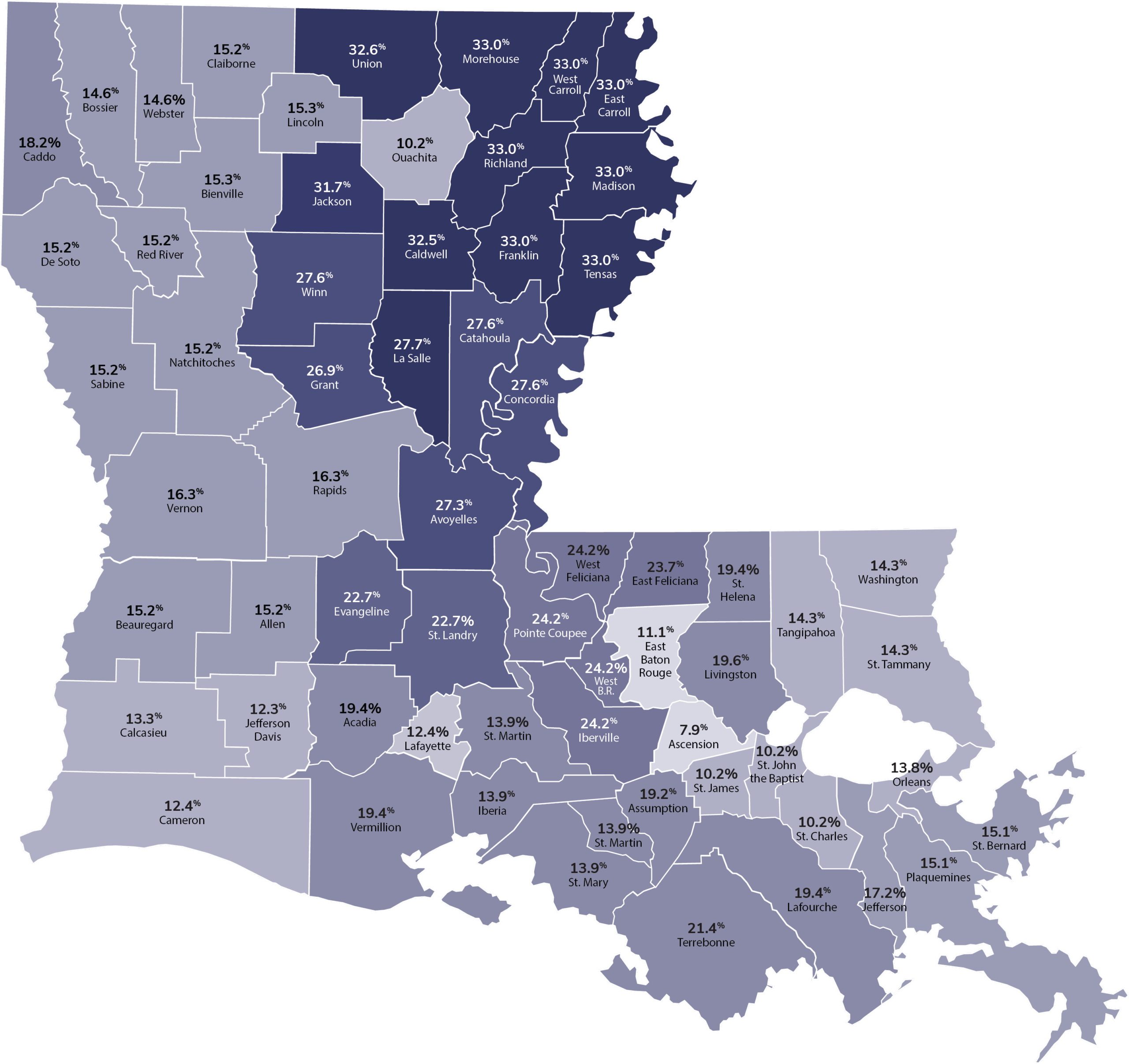
High overall unemployment rates may contribute to the steep climb that Opportunity Youth in northeast Louisiana face. In 2023, many of these parishes–Franklin, Morehouse, Madison, West Carroll, East Carroll, and Tensas–reported unemployment rates of over 5%, compared to the state average of 3.6%, indicating that it may be more difficult for young people to find work in these communities.10East Carroll Parish had the highest unemployment rate in the state in 2023 at 8.8%. Louisiana Workforce Commission, LAWorks: VOSnet Online Job Matching / State Unemployment Data, https://www.louisianaworks.net/hire/vosnet/default.aspx. Conversely, Ascension and East Baton Rouge reported unemployment rates below the statewide average.11The Louisiana Workforce Commission uses Bureau of Labor Statistics’ Local Area Unemployment Statistics (LAUS) to calculate parish-level unemployment rates. LAUS uses U.S. Census Current Population Survey (CPS) rather than U.S. Census American Community Survey (ACS) data to determine unemployment rate. When calculating disconnection rates, this report used ACS self-reported survey data so there may be some variation between overall parish-level unemployment rates and youth unemployment rates as calculated in this report. For more information, see: LAWorks: VOSnet Online Job Matching / State Unemployment Data, https://www.louisianaworks.net/hire/vosnet/default.aspx; U.S. Bureau of Labor Statistics, “Local Area Unemployment Statistics Geographic Concepts,” U.S. Bureau of Labor Statistics, https://www.bls.gov/lau/laugeo.htm; U.S. Census Bureau, “Differences Between the American Community Survey (ACS) and the Annual Social and Economic Supplement to the Current Population Survey (CPS ASEC),” Census.gov, June 23, 2023, https://www.census.gov/topics/income-poverty/poverty/guidance/data-sources/acs-vs-cps.html
Residential youth institutions, including juvenile detention facilities, prisons, mental health facilities, and other group quarters, can also influence the geographic distribution of Opportunity Youth across Louisiana.12State of Louisiana, Office of Juvenile Justice. “Regional Locations | Office of Juvenile Justice Directory.” https://ojj.la.gov/directory. For a detailed analysis of how youth institutions impact local disconnection rates in Louisiana, see: Measure of America, Youth Disconnection in The Rapides Foundation Service Area, 2023 (New York: Social Science Research Council, August 2023), 7. https://measureofamerica.org/youth-disconnection-trfsa-2023/. Young people living in these group quarters are included in ACS data.13U.S. Census Bureau, “Group Quarters and Residence Rules for Poverty,” Census.gov, last revised June 23, 2023, https://www.census.gov/topics/income-poverty/poverty/guidance/group-quarters.html. In this report, institutionalized young people are considered connected if participating in educational or work programs while living in these facilities. However, nationally, nearly 70% of institutionalized young people were disconnected in 2021, a rate over six times that of overall youth, suggesting that youth institutions in Louisiana also disproportionately house Opportunity Youth.14Lewis, Kristen. Ensuring an Equitable Recovery: Addressing Covid-19’s Impact on Education. New York: Measure of America, Social Science Research Council, 2023, 20. Nationally, Opportunity Youth are 20 times more likely to be living in an institution than their connected peers.15Lewis, Kristen, Alex Powers, Cara Wohnsigl, Kate Harvey, Tara Shawa. Broad Recovery, Persistent Inequity: Youth Disconnection in America. New York: Measure of America, Social Science Research Council, 2024, 10.
Disconnection By Race, Ethnicity, & Sex
Disconnection rates vary substantially by race in Louisiana. While 12.6% of white youth were disconnected in 2023, over 20.5% of Black youth experienced disconnection, almost double the rate of disconnection. Young people who identified as two major races also experienced higher disconnection rates (15.7%) than their white peers.

Black youth in Louisiana often face a rockier path into adulthood. They face barriers such as being more likely to be systems-involved, less likely to graduate from high school, and more likely to live in economically disadvantaged communities. Targeted interventions must be responsive to these racial discrepancies within Opportunity Youth in Louisiana, addressing specific barriers that Black youth may face, including discrimination in school, hiring, and in the criminal legal system, educational affordability, and lack of culturally responsive support systems.
Comparing the demographics of Opportunity Youth to connected youth aged 16-24 in Louisiana reveals that Black youth are significantly overrepresented among Opportunity Youth. While Black youth constitute 34.2% of Louisiana's connected youth population, they make up nearly half (47.5%) of all Opportunity Youth in the state—an overrepresentation of 13.3 percentage points.
Figure 10. Louisiana’s Opportunity Youth Are Disproportionately Black
In contrast, white youth are substantially underrepresented among Opportunity Youth. While white youth constitute 53.6% of connected youth in Louisiana, they make up only 41.5% of Opportunity Youth.
The patterns of youth disconnection in Louisiana reveal a complex interplay of racial and sex factors that shape young people's access to education and employment opportunities. The following table provides a more detailed breakdown of disconnection distribution by race and sex:
Table 3. Disconnection Rates by Race and Sex
|
| % of Opportunity Youth | % of Connected Youth | % Point Difference |
|---|---|---|---|
| Black Women | 21.3% | 17.7% | 3.6% |
| Black Men | 26.2% | 16.5% | 9.7% |
| White Women | 21.5% | 26.1% | -4.7% |
| White Men | 20.1% | 27.4% | -7.4% |
| 2+ Races Women | 3.4% | 3.1% | 0.3% |
| 2+ Races Men | 3.3% | 3.5% | -0.3% |
| Hispanic Women | 9.5% | 6.9% | -2.7% |
| Hispanic Men | 5.7% | 8.4% | -2.7% |
Over one in four Opportunity Youth are Black men, making up the largest percentage of Opportunity Youth in the state. They are also the most overrepresented group (+9.7 percentage points) among Opportunity Youth. Black women are also overrepresented (+3.6 percentage points) within Louisiana’s Opportunity Youth. This stark disparity suggests that unique structural barriers may be disproportionately affecting young Black men’s ability to maintain connections to school and work.
For white youth, both men and women are underrepresented among Opportunity Youth, but with notable sex differences. White men show a stronger underrepresentation (-7.4 percentage points) compared to white women (-4.7 percentage points), suggesting potentially better access to educational and employment pathways for young white men in Louisiana. Additionally, Hispanic women are overrepresented within Opportunity Youth, making up 9.5% of OY as compared to 6.9% of connected youth, while Hispanic men are slightly underrepresented.16In the American Community Survey (ACS), race and Hispanic or Latino origin are recorded through separate questions. Because individuals who identify as Hispanic may be of any race, totals that include both racial categories and Hispanic origin will not necessarily sum to 100%. U.S. Census Bureau, “Why We Ask Questions About... Hispanic Origin,” American Community Survey (ACS), October 30, 2024, https://www.census.gov/acs/www/about/why-we-ask-each-question/ethnicity/.
Efforts to reconnect Louisiana youth must include culturally responsive and targeted interventions to address the unique challenges faced by different racial and sex groups within the Opportunity Youth population.
Policy Pathways to Plugging In Opportunity Youth
This report aims to shed light on Opportunity Youth across communities in Louisiana – who they are, where they live, what obstacles they face, and how they have fared socially and economically over time. By analyzing data on Louisiana’s Opportunity Youth, we can better understand the most significant challenges young people face when trying to connect with opportunities for their future. We believe that understanding the nature and scope of youth disconnection in our communities will allow policymakers, advocates, service providers, philanthropic organizations, educational providers, employers, and governmental representatives to better understand the needs of Louisiana’s youth.
Preventing disconnection is often easier than plugging disconnected youth back into opportunity. Therefore, we must prepare young people for success as they grow, providing resources and meeting their needs to ensure they have the skills and tools necessary for a smooth transition into adulthood. This includes funding high-quality preschool and childcare for all Louisiana families, improving K-12 education, and tracking and creating early warning systems that support students who repeat a grade, fail core courses, or are frequently absent, as these all increase the likelihood of dropping out of high school.
Young people must meet a diverse range of everyday needs to engage effectively in education or employment. This makes community-based supports and wrap-around services essential to ensuring their future growth and success. Expanding access to resources, including mental health services, transportation, job training, mentorship, affordable housing, and technology, will enable young people to meet their basic needs and consistently prepare for school and work.
Economic opportunity and financial stability are crucial to young people’s well-being. The discrepancies in income and poverty levels shown in this report between Opportunity Youth and their connected peers indicate that economic insecurity can lead to disconnection. Policymakers should prioritize several key policy measures that support the economic security of young people in Louisiana, including increasing the state’s EITC (Earned Income Tax Credit), establishing a statewide CTC (Child Tax Credit), and establishing a state minimum wage.
Youth also need educational pathways to connect to work and career opportunities. Programs like Go Grants, the MJ Foster Promise Program and apprenticeships can provide youth with the support they need to transition to the next stage in life.
Louisiana’s high disconnection rates make it essential to understand who our state’s Opportunity Youth are, where they live, when they are most likely to disconnect, and what barriers they face as they learn and grow. This data report emphasizes the importance of reconnecting Louisiana’s youth with educational and employment opportunities that match their interests and aptitudes. We hope this report can be a tool to help support our youth and provide them with the resources they need to thrive.
About Loyal
LOYAL (Louisiana Opportunity Youth Alliance) is a statewide network of direct service providers and advocacy organizations working to ensure that the state’s policies and institutions support the needs of Louisiana’s Opportunity Youth. We connect grassroots community organizations, youth and policymakers to help them design responsive policies that meet the needs of Louisiana’s youth. We focus on creating a more substantial connective fabric to support all young people transitioning from school to the workforce.
Acknowledgement
This report was written by Christina LeBlanc and edited by Stacey Roussel. Alí Bustamante provided research and data support. For Good Content designed the PDF and web version.